
Ambulance and Medical Team for Sports Competitions
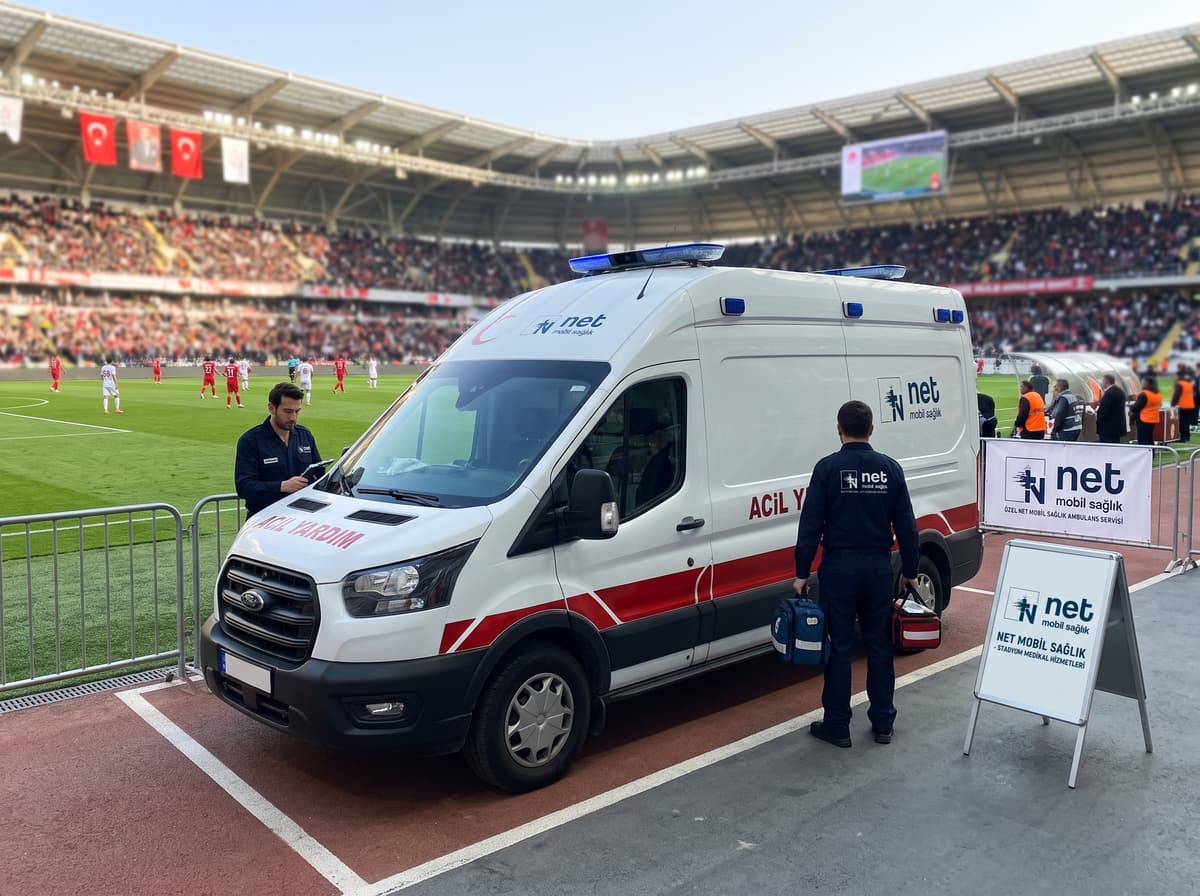
A sports event ambulance service provides an on-site ambulance and medical team for athletes, referees and spectators throughout matches, tournaments, running races and similar sporting events. Net Ambulans prepares the medical plan based on the sport, the competition format and the layout of the venue.
Key risks at sporting events
Health risks at sports competitions fall into two groups. For athletes, the main concerns are injuries such as collisions, falls, sprains and fractures, along with exertion-related dehydration, heat stroke and, though rare, sudden heart problems. For spectators, health issues arise from crowding, weather conditions and long periods of waiting.
Needs also vary by sport:
- Team sports: A team on standby at the sideline and stretcher removal from the field
- Running and cycling races: First aid points spread along the course and a team concentrated at the finish area
- Combat sports: Medical staff on constant standby ringside or matside
- School and amateur tournaments: A flexible team working in shifts for matches that run all day
Athlete and spectator health are planned separately
At competitions with spectators, a single team should not be expected to cover both the field and the stands. While the sideline team focuses solely on the athletes, a separate team or first aid point is planned for the stands or spectator area. This way, while an athlete is being treated, a spectator who becomes unwell in the stands can also get help without waiting. The ambulance position is chosen so that an athlete carried off the field on a stretcher can reach the vehicle without entering the spectator flow.
Checklist for organizers
- Share the competition schedule, warm-up times and breaks with the medical team.
- Designate a sideline area for the medical team that does not interfere with play.
- Keep the ambulance approach route clear throughout the competition.
- At youth and school tournaments, have parent contact details for the athletes on hand.
- In hot weather, provide water and shaded areas for athletes and spectators.
- Give the medical team a chance to meet the referees and team officials before the competition.
Sports federations and competition rules may have their own requirements regarding medical services; organizers are advised to check with their federation and the relevant authorities. For events with large crowds, you can also explore our concert and festival pages. You can reach Net Ambulans at 0212 912 51 84.
Competition medical plan in 5 steps
- Site survey: The field, stands or course are inspected; ambulance access routes and the nearest hospitals are identified.
- Risk analysis: The sport, number and age group of athletes, expected spectators, competition duration and weather conditions are assessed.
- Team plan: Sideline and stand teams, first aid points along the course and ambulance positions are determined.
- On site: The team takes up position before warm-ups, communicates with referees and organizers, and remains on duty until the competition ends.
- Report: Interventions and transfers are reported to the organizer, with personal data protected.
Sample team and vehicle plan by competition type
The table below is a sample planning table; the final team and vehicle plan is determined by an event-specific risk assessment and the regulations in force.
| Event scale | Team | Vehicle |
|---|---|---|
| Amateur match / school tournament | 1 paramedic or emergency medical technician, 1 driver | 1 ambulance |
| Professional competition / match with spectators | 1 doctor, 2 paramedics or emergency medical technicians (sideline and stands), driver | 1–2 emergency ambulances |
| Running race, marathon, cycling race | Paramedic or emergency medical technician teams spread along the course, a doctor at the finish area | 2 or more ambulances and first aid points depending on course length and number of participants |
Frequently Asked Questions
Do amateur matches also need an ambulance?
Collisions, falls and exertion-related health problems can also occur at amateur matches. Having a medical team on site ensures that an injured athlete receives first aid without delay. Whether it is required, and to what extent, should be assessed based on the sport, the number of participants and the rules of the relevant federation or organization.
How are medical teams positioned at marathons and running events?
At running events, medical teams are positioned at set intervals along the course, and a more comprehensive first aid point is set up at the finish area. Points where ambulances can access the course are determined in advance. The number and positions of teams are finalized in the risk analysis based on course length, number of participants and weather conditions. In hot weather, points near water stations are also considered.
What happens when an athlete is injured?
With the referee's permission, the sideline team enters the field, assesses the athlete and provides first aid. If needed, the athlete is carried off the field on a stretcher and reassessed in the ambulance. When hospital care is required, transfer to an appropriate healthcare facility is arranged; how on-site medical support will be maintained during this time is determined at the planning stage.
Related Services
Contact Us
Don't hesitate to contact us for emergencies or more information about our services. We are at your service 24/7.