
Private Emergency Ambulance Service
A private emergency ambulance service is a paid ambulance service provided so that, in the event of a sudden health problem, the patient can be assessed where they are, given any necessary first response and, if needed, taken to a suitable healthcare facility. Net Ambulans plans this service in Istanbul 24/7 based on requests received by phone.
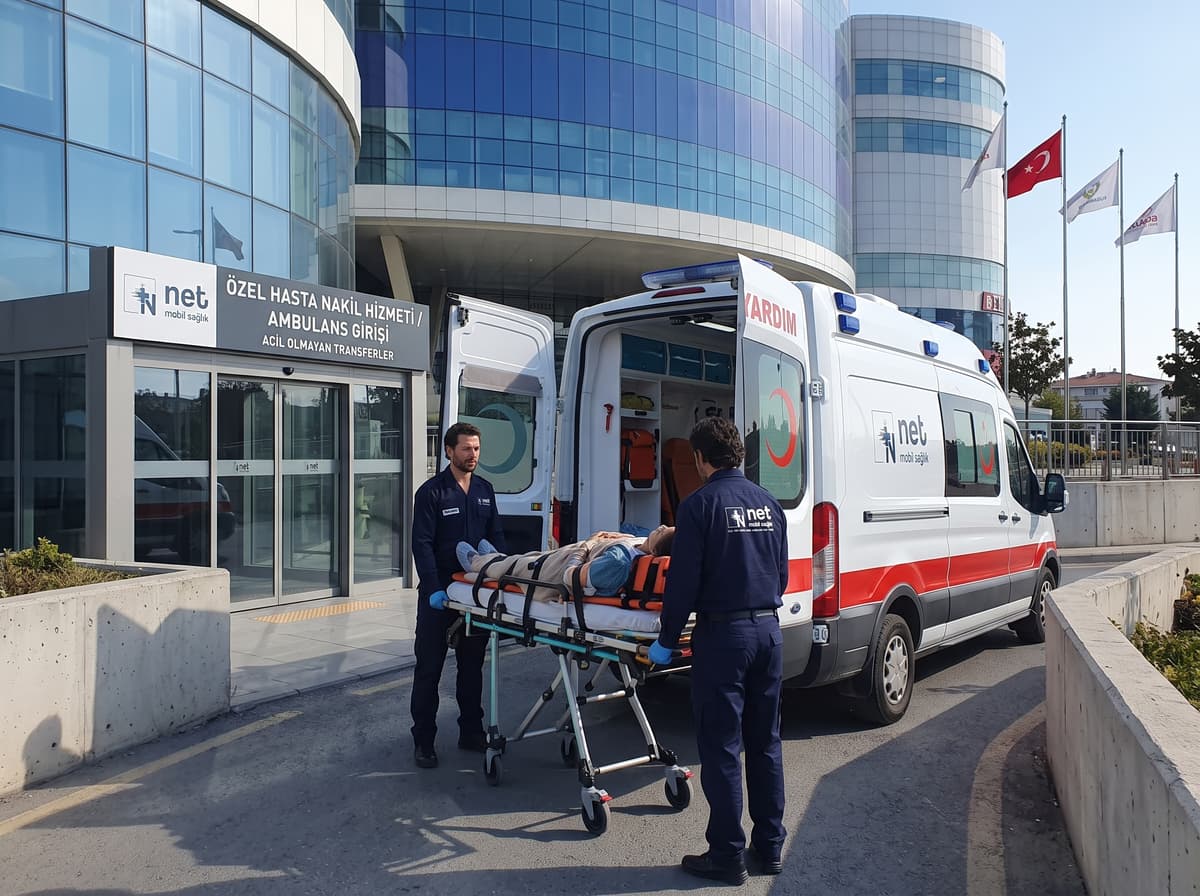
What to expect when you call a private ambulance
When you call Net Ambulans at 0212 912 51 84, the team answering the call will ask you for some basic information. We ask these questions so that we can send the right team and vehicle to the address:
- The patient's age, complaint and when the complaint started
- Their level of consciousness, whether they are breathing and whether they can speak
- Any known chronic conditions and medications they take regularly
- The full address, building entrance, floor and elevator information
- The healthcare facility the patient should be taken to, if any
When the team arrives at the address, they assess the patient, measure vital signs and provide any necessary first response. If the patient needs to be taken to a healthcare facility, they are transferred to a hospital suited to their condition and handed over to the team there, along with a report of the interventions performed.
What team and equipment are on an emergency ambulance?
Emergency ambulances are equipped according to the equipment standards defined in the regulations. These vehicles generally carry a patient monitor, defibrillator, oxygen and respiratory support equipment, airway management supplies, immobilization and carrying equipment, as well as emergency medications and consumables. Depending on what the case requires and on request, the team may include a physician, paramedic or emergency medical technician. All ambulances in the Net Ambulans fleet are in this class and are equipped for ICU transfers.
This team and equipment setup is intended to ensure the patient is safely monitored and given any necessary first response until they reach the hospital. Definitive diagnosis and treatment take place at the hospital.
When is a private emergency ambulance the right choice?
Private emergency ambulance services are generally used for conditions that come on suddenly but do not show signs of being life-threatening. Examples include:
- An elderly or bedridden patient developing complaints such as fever, weakness or inability to eat
- Being unable to get up after a fall at home, while remaining conscious and breathing normally
- Taking a patient whose chronic condition is being followed to the hospital where they are monitored for assessment
- People who feel unwell at work or at an event and need a medical check
Even in these situations, the patient's condition can change at any moment. If a new symptom such as confusion, shortness of breath or chest pain appears while waiting, call 112 without delay.
Being prepared in advance
For families with a relative at home who has a chronic illness, is elderly or has limited mobility, a few simple preparations save time in an emergency. The most important of these are keeping the patient's diagnoses, medications, allergies and latest discharge summary in a single file; keeping 112 and the Net Ambulans number somewhere easy to reach on your phone; and sharing details such as the building entrance and elevator with family members.
If the patient uses an oxygen concentrator, breathing device or other medical device at home, this information should also be added to the file. If the file also includes the name of the hospital where the patient is followed and their physician, the team can assess the patient more quickly and make a sounder transfer decision.
For planned transfer needs, see our transfer ambulance service; for events, see our event medical services. Drawing on experience gained since 2015, Net Ambulans is available 24/7, including public holidays.
Frequently Asked Questions
Can a private ambulance take the patient to the hospital of my choice?
If the patient's condition allows transfer, a transfer to the healthcare facility the family prefers can be arranged. However, after an on-site assessment, the team may decide that the patient's condition requires a closer hospital or one with different equipment. In that case, the reason is explained to the family, and the patient's safety always comes first.
What should I do until the ambulance arrives?
Stay with the patient, help them stay calm and note any changes in their condition. Do not give them food or drink, and do not move them unnecessarily. Keep the door open, put pets in a separate room and gather the patient's medications and medical reports together. If the condition worsens, call 112 immediately.
What equipment is on an emergency ambulance?
Emergency ambulances generally carry a patient monitor, defibrillator, oxygen and respiratory support equipment, airway supplies, immobilization and carrying equipment, and emergency medications. Depending on what the case requires, the team may include a physician, paramedic or emergency medical technician. Definitive diagnosis and treatment take place at the hospital.
Related Services
Contact Us
Don't hesitate to contact us for emergencies or more information about our services. We are at your service 24/7.