
Festival Ambulance and Medical Services
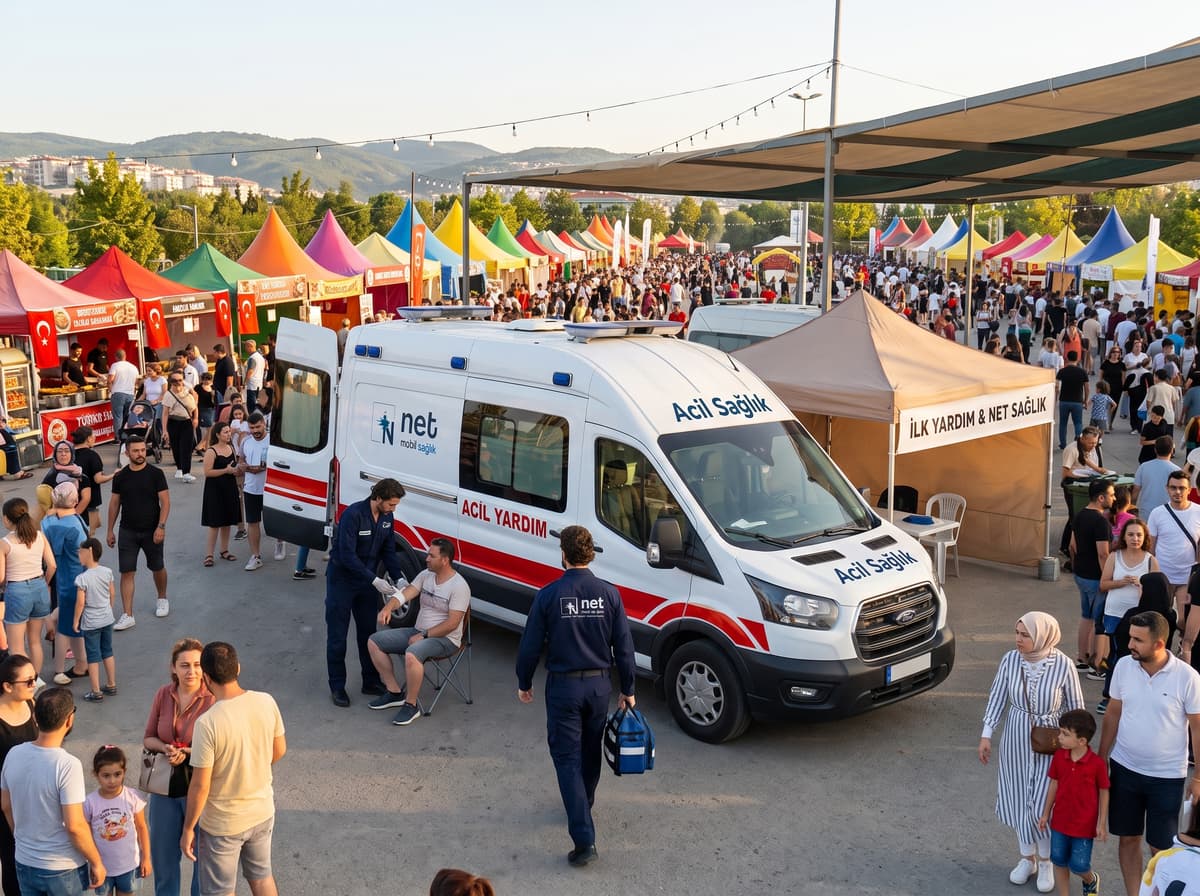
A festival ambulance service provides an on-site ambulance, medical tent and medical team working in shifts for attendees, performers and staff at open-air festivals lasting one or more days. Net Ambulans prepares the festival medical plan based on the size of the site, the number of days, whether there is a campsite and seasonal conditions.
What makes festivals different?
The key difference between a one-night concert and a festival is duration. Festivals often run from midday until late at night, continue for several days, and at some of them attendees stay on site. This calls for a differently structured medical plan:
- Heat stroke and dehydration: At summer festivals, long hours in the sun, insufficient water intake and intense physical activity are a significant risk.
- Campsite: At festivals with overnight stays, medical support is also needed during the night; minor injuries, insect stings, getting chilled and forgotten medication for chronic conditions may occur.
- Accumulated fatigue: Lack of sleep, irregular meals and days of constant activity can lead to more people seeking medical help on later days.
- Large site: On sites with multiple stages, zone-based planning is needed so the team can reach every point.
- Alcohol and drug use: At long-running events, monitoring and observing these cases may require more resources.
Medical tent and observation area
At large festivals, the medical tent is the hub of on-site medical services. The tent includes an area where minor cases are assessed, allowed to rest and kept under observation. This setup helps manage cases that don't require a hospital transfer on site and helps keep ambulances available for patients who truly need them. We recommend setting up the tent at a shaded, easy-to-find location with ambulance access.
How is the shift plan structured?
The festival shift plan is based on the stage program and how attendee density changes over the course of the day. A smaller team may be enough in the first hours after the gates open, and the team is reinforced as main-stage performances begin. Shift changes are scheduled so that they don't coincide with peak hours. At each handover, the incoming team is briefed on people under observation on site, open cases and areas that need attention. The night shift is planned independently of the day team, especially at festivals with a campsite.
Weather conditions and changes throughout the day
At open-air festivals, the weather can change noticeably during the day. Heat stroke risk is the main concern around midday, while people may get chilled as the air cools at night. Sudden rain, slippery ground and mud can increase fall injuries. The medical team follows weather forecasts daily and reviews equipment and team placement accordingly.
Preventive recommendations
Having a medical team on site is important; however, some measures can also help reduce the number of people seeking medical help. Examples include free water points, shaded rest areas, signage showing the location of the medical tent and hot weather warnings for attendees. After the site survey, Net Ambulans shares its recommendations on these matters with the organizer.
Festival staff are part of the plan as well. Build-up crews, security staff, food and beverage workers and volunteers stay on site for longer hours than attendees. We recommend making sure these people know where the first aid point is, planning their rest breaks and ensuring access to water in hot weather. Separate backstage medical support for performers can also be planned on request.
Since obligations regarding medical services may vary depending on the type of event and local regulations, you should check with the relevant authorities. For one-night events, see our concert ambulance service; for corporate events, see our event ambulance services. For a site survey and quote, you can reach Net Ambulans at 0212 912 51 84.
How are festival medical services planned?
- Site survey: Stages, the campsite, water points, shaded areas, the medical tent location and ambulance routes are inspected on site.
- Risk analysis: The number of days, estimated daily attendance, stage program, expected weather and whether there will be overnight stays are assessed.
- Team plan: The medical tent, mobile team zones, ambulance positions and the shift plan, including nights, are put in writing.
- On site: Teams take up position before the site opens; shift changes take place as planned and regular communication with the event team is maintained.
- Report: Daily case summaries and an end-of-event review are shared with the organizer, with personal data protected.
Sample team and vehicle plan by daily attendance
The table below is a sample planning table; the final team and vehicle plan is determined by an event-specific risk assessment and the regulations in force.
| Event scale | Team | Vehicle |
|---|---|---|
| Up to 2,000 people per day | 1 doctor, 2 paramedics or emergency medical technicians, driver; in shifts | 1 emergency ambulance, 1 first aid point |
| 2,000–10,000 people per day | 1–2 doctors, 4 paramedics or emergency medical technicians, 2 mobile teams, shift supervisor | 2 emergency ambulances, medical tent |
| 10,000 people per day and above | 2 or more doctors, zone-based mobile teams, on-site medical coordinator | 3 or more emergency ambulances, medical tent and observation area |
| Festival with campsite / running through the night | Night shift in addition to the day team (doctor or paramedic plus emergency medical technician) | At least 1 ambulance positioned near the campsite and a first aid point open at night |
Frequently Asked Questions
How does the medical team work at multi-day festivals?
At multi-day festivals, medical services are run on a shift plan. Team rest periods, shift change times and the handover procedure are set in advance. This manages staff fatigue while ensuring a fresh team is on site at all hours. At festivals with a campsite, a night shift is also included in the plan.
How do you prevent heat stroke at a festival?
The medical team is prepared to recognize and respond early to signs of heat stroke and dehydration, and cooling and observation facilities are planned in the medical tent. The organizer is advised on preventive arrangements such as free water points, shaded areas and warnings for attendees. In serious cases, the patient is transferred to a hospital.
Why is a medical tent needed at a festival site?
The medical tent is a central point where minor cases are assessed, allowed to rest and kept under observation. It allows people who don't need to go to a hospital to be monitored on site and helps keep ambulances available for patients who need a transfer. The tent should be set up at a shaded, easy-to-find location with ambulance access.
Is there medical support at the campsite at night?
At festivals with overnight stays, we recommend planning a separate shift for the night hours. This shift can include a first aid point and an ambulance positioned near the campsite. The structure of the night team is determined by the number of people at the campsite and the results of the risk analysis; details are finalized together with the organizer. The location of the first aid point should be clearly marked at the campsite.
How far in advance should a festival medical plan be prepared?
Because festivals cover large areas and run for more than one day, we recommend starting planning early. The site survey, risk analysis, shift plan and coordination with the event team take time. Once the event dates, site plan and estimated daily attendance are shared, Net Ambulans prepares a plan and quote tailored to you.
Contact Us
Don't hesitate to contact us for emergencies or more information about our services. We are at your service 24/7.