
Medical Services at Trade Fairs and Exhibitions
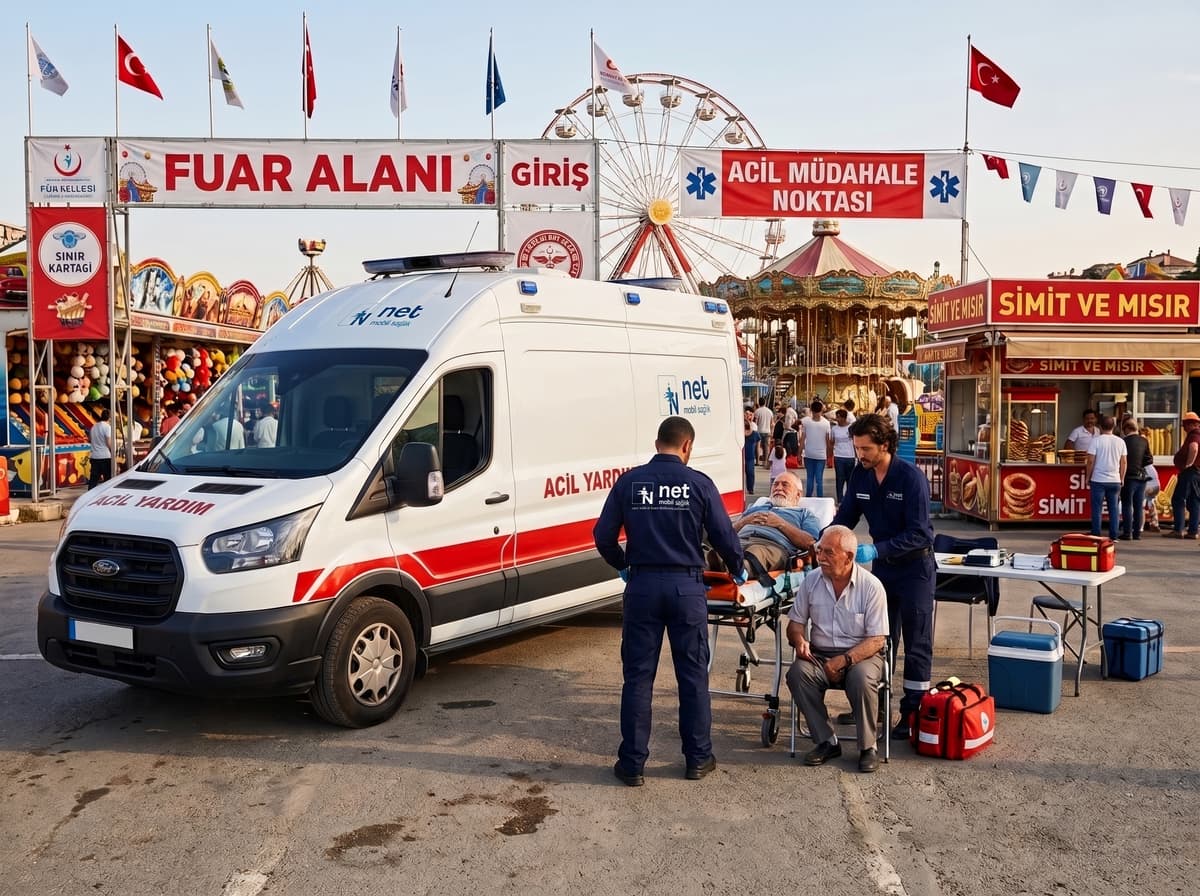
Trade fair medical services are provided at fairs and exhibitions for visitors, exhibitor staff and setup crews, with an on-site first aid point, medical staff and an ambulance for the entire duration of the fair. Net Ambulans prepares the fair's medical plan based on the number of halls, expected daily visitors and the length of the fair.
Why are medical needs different at trade fairs?
Trade fairs usually last several days and spread across large indoor halls. Visitors walk for hours, stay on their feet and move through crowded aisles. Exhibitor staff work at their booths for long hours. On setup and teardown days, the risk of workplace accidents rises due to heavy lifting, working at height and vehicle traffic within the venue.
Common reasons people seek medical help at trade fairs include:
- Fatigue, dizziness and fainting
- Flare-ups of chronic conditions such as blood pressure, diabetes and heart problems
- Falls and minor injuries
- Workplace accidents during setup and teardown
Where should the first aid point be?
The location of the first aid point within the fairground directly affects how effective the service is. It is recommended that the first aid point be easy for visitors to find, marked with signage and close to an exit where an ambulance can pull up. At multi-hall fairs, mobile teams working inside the halls, in addition to the main first aid point, make it easier to reach cases in distant areas. Briefing booth staff and the security team on how to alert the medical team when they notice a visitor who has fallen ill is also part of the plan.
Notes for exhibitors
For employees who will spend long hours at their own booth, simple measures such as regular rest breaks, drinking enough water and comfortable shoes can reduce the need for medical help. Employees with chronic conditions are advised to keep their medication with them. If heavy products or machinery will be displayed at the booth, it is also helpful to review the safety measures for setup and display with the company's own occupational safety officer. When booth staff know where the first aid point is throughout the fair, the first alert can be raised without delay if a visitor falls ill.
At international fairs, it is advisable to prepare in advance for communicating with foreign visitors. Since obligations may vary depending on the type of event and local regulations, you should consult the relevant authorities. You can also visit our page on congresses and meetings. You can reach Net Ambulans at 0212 912 51 84.
Trade fair medical service process
- Site survey: The fairground, halls, connecting corridors and points where an ambulance can pull up are inspected.
- Risk analysis: Estimated daily visitors, the length of the fair, the characteristics of the industry and the setup-teardown schedule are assessed.
- Team plan: The location of the first aid point, mobile teams between halls, the ambulance position and shifts are determined.
- On site: The team takes up its post before the doors open, stays in contact with hall managers and remains on site until the fair closes.
- Report: Daily case summaries are sent to the organizer with personal data protected.
Sample team and vehicle plan by fair size
The table below is a sample planning table; the final team and vehicle plan is determined by an event-specific risk assessment and the regulations in force.
| Event size | Team | Vehicles |
|---|---|---|
| Single hall, up to 5,000 visitors per day | 1 doctor or paramedic, 1 emergency medical technician | 1 first aid point, 1 ambulance |
| Multiple halls, 5,000+ visitors per day | 1 doctor, 2–4 paramedics or emergency medical technicians, mobile team | 1 first aid point, 1–2 emergency ambulances |
| Setup and teardown days | 1 paramedic or emergency medical technician, driver | 1 ambulance |
Frequently Asked Questions
Is medical cover also needed on the fair's setup and teardown days?
On setup and teardown days, the risk of workplace accidents can rise due to heavy lifting, working at height and vehicle traffic within the venue. Medical cover with a smaller team can be planned for these days. The scope is determined together with the organizer and occupational safety officers, based on the size of the fair and the occupational safety plan.
How is the medical team organized at multi-hall fairs?
At multi-hall fairs, mobile teams working between the halls can be planned alongside a central first aid point. This way visitors can easily find the first aid point, and the team can reach cases in distant halls. The points where the ambulance can pull up are determined during the site survey and shared with all teams. Hall managers are also briefed on how to reach the medical team.
Does the same team work every day throughout the fair?
A shift plan is prepared based on the length of the fair and daily operating hours. Teams' rest periods are respected, and case information is handed over at shift changes. The aim is to have a fresh team on duty every day and every hour of the fair. The details of the plan are finalized with the organizer, taking the fair's opening and closing hours into account.
Contact Us
Don't hesitate to contact us for emergencies or more information about our services. We are at your service 24/7.